Dog Diarrhea Treatment: What Helps & How to Stop It (Vet Verified)

When your dog has diarrhea, it’s natural to want to fix it fast. But the right treatment depends on how severe the case is and what’s causing it. Here’s a practical, safety-first look at what actually helps.
How Do You Treat Diarrhea In Dogs – The Short Answer
Diarrhea treatment typically starts with supportive care: hydration, an easily digestible diet and close monitoring for 24-48 hours. Most mild cases resolve with supportive care alone and don’t need antibiotics. Veterinary treatment becomes necessary when diarrhea is severe, persistent, bloody or accompanied by vomiting, lethargy or dehydration.
Key Takeaways
- Supportive care including hydration, rest and appropriate feeding, is the foundation of treatment for nearly every case
- Most mild and moderate cases of acute diarrhea don’t need antibiotics
- Never give human medications like Pepto Bismol or Imodium without veterinary guidance
- Stopping diarrhea safely means identifying the cause, not just suppressing the symptom
- Severe, bloody or persistent diarrhea, or diarrhea with other symptoms, needs veterinary treatment
Dog Diarrhea Treatment: What Usually Helps?
Veterinary guidelines classify acute diarrhea by severity, and treatment differs accordingly. Around 90% of cases are mild and can be treated as outpatients with fluid support and supportive treatment alone; roughly 10% are moderate; fewer than 1% need hospitalization. Notably, there’s high-certainty evidence that antimicrobials aren’t needed for mild and moderate cases, since overuse harms the gut microbiome and drives resistance.
When Can Diarrhea Be Monitored at Home?
A dog with one or two loose stools who’s otherwise eating and behaving normally can often be monitored briefly. Many cases of acute diarrhea respond well to conservative treatment, resolving through the body’s own healing mechanisms, often without ever identifying the exact cause. If there’s no improvement within a day or two, involve your vet rather than continuing to wait.
“I got the Maven sensor for my 14-year-old Chihuahua mix with heart and trachea issues. It gave me back peace of mind – I can track her RRR, BPM, drinking, and activity anytime and know instantly if something’s wrong. Highly recommend!”

★★★★★
Chiara De Luca
Titti
Hydration and Supportive Care
Water is the single most important element of home care. Fluid loss drives most of diarrhea’s real dangers – dehydration causes electrolyte imbalances, strains the kidneys and can lead to organ failure if severe and uncorrected. For mild to moderate cases, oral rehydration fluids are generally adequate, but vomiting or significantly dehydrated dogs need veterinary fluid therapy. Keep multiple fresh water sources always accessible.
What Can I Give My Dog for Diarrhea?
Veterinary-specific probiotics are among the few things commonly recommended at home, with real evidence behind them. One study found probiotic administration led to a shorter resolution time and reduced need for metronidazole (antibiotic) compared with placebo. Other trials showed probiotics improving stool consistency and reducing potentially pathogenic bacteria. Still, consult your veterinarian before giving anything, since product quality and appropriate strains vary.
What Should You Avoid Giving a Dog With Diarrhea?
Never give human medications such as Pepto Bismol (bismuth subsalicylate) or Imodium (loperamide) unless directed by a veterinarian – they can harm certain dogs and interact poorly with other medications. Unneeded broad-spectrum antibiotics are also worth avoiding, since antibiotic use in mild-to-moderate cases doesn’t improve outcomes and disrupts the gut microbiome.
How to Stop Diarrhea in Dogs Safely
Safely resolving diarrhea means addressing what’s actually driving it, not just suppressing the symptom. Antidiarrheal medications are only one part of the picture, typically used alongside dietary management and, when needed, treatment aimed at an underlying cause like parasites or infection. Masking diarrhea without addressing the cause can delay recognizing a more serious problem.
“Treatment for diarrhea depends on the dog and the underlying cause. Supportive care is always required whether the case is mild or severe, but understanding what is the underlying cause is very important.” – Joana Babo, DVM, Veterinarian at Maven Pet
When Does a Dog Need Veterinary Treatment?
Seek veterinary treatment if you notice:
- Diarrhea lasting more than a day or two without improvement
- Blood in the stool, or black, tarry feces
- Signs of dehydration: excessive thirst, dry gums, lethargy or reduced skin elasticity
- Restlessness, pacing or reluctance to lie down suggesting abdominal discomfort
- Vomiting, fever or ongoing appetite loss
What May a Veterinarian Do for Dog Diarrhea?
Treatment depends on the suspected cause. Your vet may run fecal tests for parasites, bloodwork and radiographs if a blockage is suspected. Most acute cases are managed with a bland, digestible therapeutic diet, sometimes paired with a veterinary probiotic, plus fluid therapy if dehydrated. Antimicrobials are reserved mainly for signs of sepsis or a clear infectious cause.
How Maven Pet Helps Monitor Your Dog During an Illness
Maven offers continuous visibility into how your dog is doing overall while you manage an illness at home.
The pet health tracker monitors activity, rest, heart rate, resting respiratory rate, scratching and water intake, building a personalized baseline and flagging deviations.

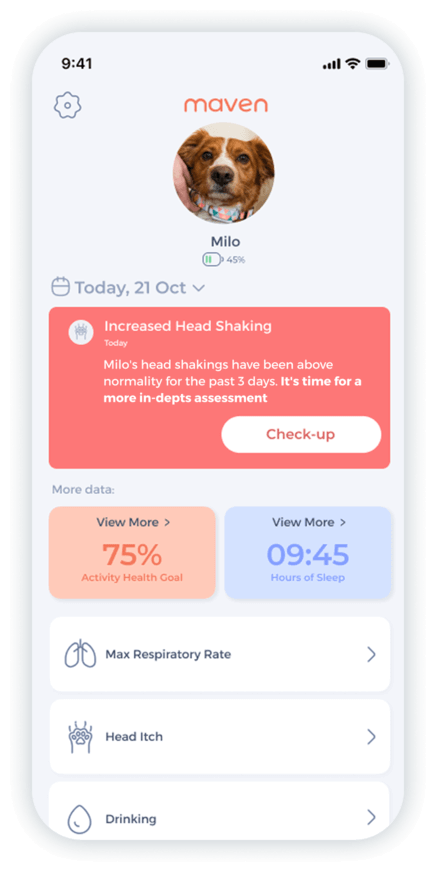
Monitor heart rate, respiratory rate, activity & rest, drinking, itch behavior.
This can mean catching a drop in activity through the dog activity tracker or changes in drinking habits via the dog drinking tracker before they’re obvious – useful data to mention to your vet. Tracking resting respiratory rate adds further context against a known normal respiratory rate in dogs.
The pet health app keeps all of this in one place, so you have real data to share at your vet visit.
FAQ (Vet-Reviewed)
By addressing the underlying cause alongside supportive care like hydration and appropriate diet, rather than relying on symptom suppression alone.
Veterinary-specific probiotics may help in mild cases, but check with your vet first. Avoid human medications unless specifically directed.
It depends on severity and cause. Most mild cases need only supportive care; more severe or persistent cases need veterinary diagnosis and targeted treatment.
When diarrhea persists beyond a day or two, is bloody, or comes with vomiting, lethargy or dehydration signs.
Not without veterinary guidance. Human anti-diarrheal medications can be harmful, and antibiotics aren’t needed for most mild-to-moderate cases.
Conclusion
Treating dog diarrhea isn’t about the first remedy that stops the symptom – it’s about supporting your dog through recovery while figuring out what’s going on. For most dogs, that means hydration, rest, diet and time. For others, it means getting your vet involved and further exams done. Knowing which situation you’re in is the real skill here.
Maven Pet focuses on improving the quality of life of our pets with technology, using artificial intelligence (AI) to enable proactive pet care. By accurately collecting and monitoring pet data 24/7 and flagging any irregularities, Maven Pet empowers pet parents and veterinarians to stay ahead of potential health issues, ensuring the well-being and longevity of our beloved companions.